
John
Summary of the Gospel of John
The Word Became Flesh
John 1:1-18: John presents Jesus as the eternal Word, who was with God and was God. Through Him all things were made, and in Him are life and light. The Word becomes flesh and dwells among us, revealing the Father and bringing grace and truth.
John the Baptist and the First Disciples
John 1:19-51: John the Baptist identifies Jesus as the Lamb of God who takes away the sin of the world and testifies that He is the Son of God. Andrew brings Simon Peter to Jesus, and Philip invites Nathanael. These first followers begin to recognize Jesus as the promised Messiah.
The Wedding at Cana and the Temple
John 2:1-25: At Cana, Jesus turns water into wine, revealing His glory and strengthening His disciples’ faith. In Jerusalem, He drives traders out of the temple and challenges its misuse. His statement about raising the temple in three days points to His own body and resurrection.
Nicodemus and the New Birth
John 3:1-36: Jesus tells Nicodemus that entering God’s kingdom requires being born of water and the Spirit. He explains God’s love in sending His Son so that believers may have eternal life. John the Baptist rejoices in Jesus’ growing ministry and affirms that the Son must increase while he decreases.
The Samaritan Woman and the Official’s Son
John 4:1-54: Jesus offers living water to a Samaritan woman and teaches that true worship is in spirit and truth. Her testimony brings others to Him, and many Samaritans believe. Back in Galilee, a royal official trusts Jesus’ word about his dying son and discovers that the boy has been healed.
Healing at Bethesda and the Son’s Authority
John 5:1-47: At the pool of Bethesda, Jesus heals a man who has been ill for thirty-eight years, telling him to get up, take his mat, and walk. The Sabbath healing provokes opposition. Jesus explains His relationship with the Father, His authority to give life and judge, and the testimony supporting His mission.
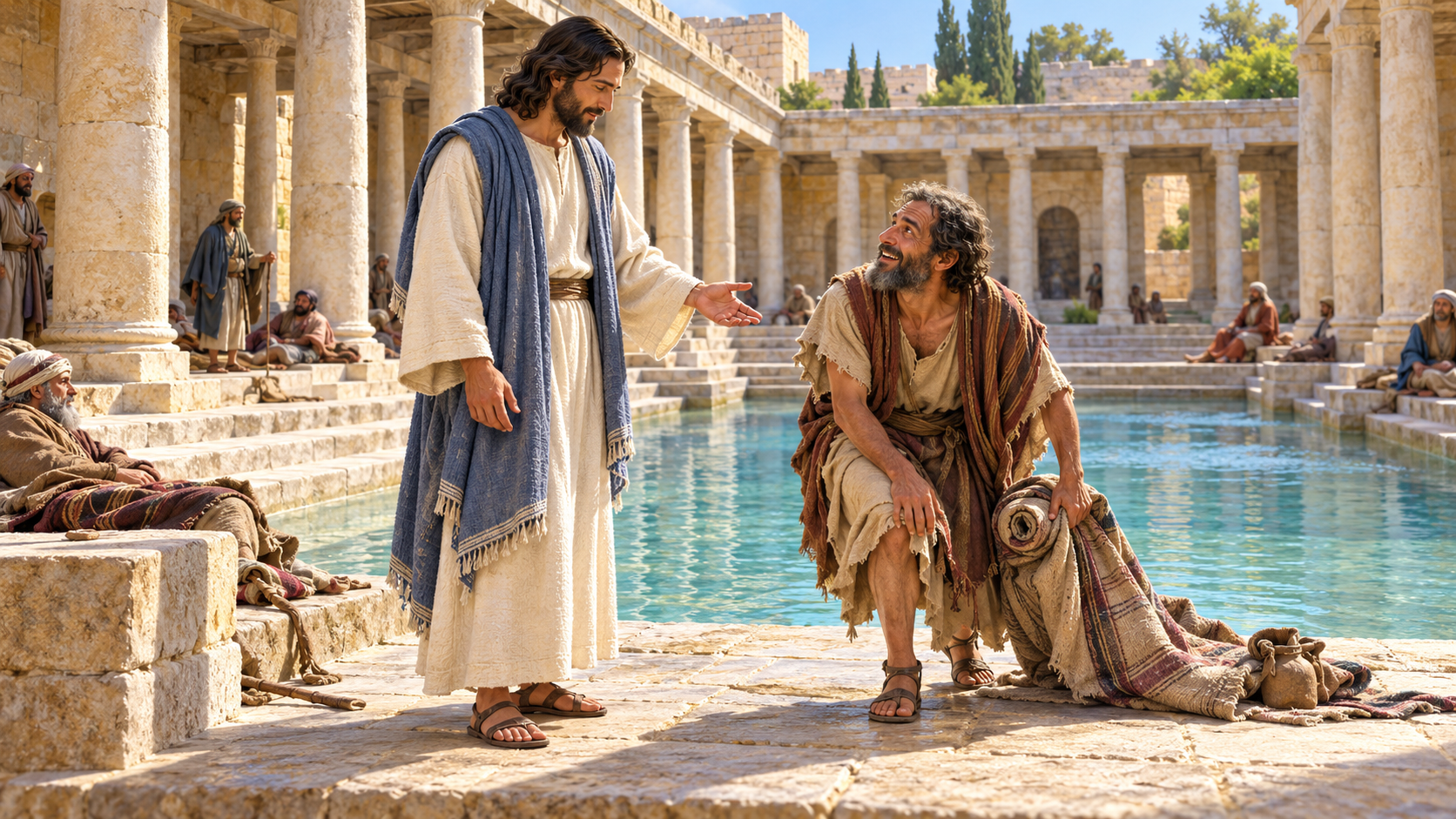
Jesus heals the lame man at the pool of Bethesda "Rise, take up thy bed, and walk" John 5:1–15. Feeding the Five Thousand and Walking on Water
John 6:1-21: Jesus feeds five thousand men with five barley loaves and two fish, leaving twelve baskets of pieces. When the crowd wants to make Him king by force, He withdraws. Later, He walks on the sea toward His disciples’ boat and reassures them as they are afraid.
The Bread of Life Discourse
John 6:22-71: Jesus calls the crowd to seek the food that endures to eternal life and identifies Himself as the Bread of Life. His teaching about giving His flesh for the life of the world challenges His listeners, and many disciples turn away. Peter affirms that Jesus has the words of eternal life.
The Festival and the Promise of Living Water
John 7:1-53: At the Feast of Tabernacles, Jesus teaches that His message comes from the Father and challenges superficial judgment. His identity divides the crowd, and officers sent to arrest Him return without doing so. He invites the thirsty to come to Him, speaking of the Spirit believers would receive.
The Light of the World and the Truth That Frees
John 8:1-59: Jesus refuses to join the condemnation of a woman accused of adultery and tells her to leave her life of sin. He declares Himself the Light of the World and teaches that abiding in His word brings freedom. His claims about His Father and His existence before Abraham provoke further opposition.
The Man Born Blind Receives Sight
John 9:1-41: Jesus gives sight to a man born blind, sending him to wash in the pool of Siloam. Religious leaders question the man and reject his testimony because the healing took place on the Sabbath. After they expel him, Jesus finds him, and the man responds with faith and worship.
Jesus the Good Shepherd
John 10:1-42: Jesus describes Himself as the door for the sheep and the Good Shepherd who lays down His life for them. His sheep recognize His voice, and He gives them eternal life. At the Feast of Dedication, His teaching about His unity with the Father leads to another attempt to seize Him.
Lazarus Raised from the Dead
John 11:1-57: When Lazarus dies, Jesus tells Martha that He is the resurrection and the life. He shares the sisters’ grief and calls Lazarus out of the tomb after four days. Many believe because of this sign, while the chief priests and Pharisees respond by planning Jesus’ death.
Anointing at Bethany and the Entry into Jerusalem
John 12:1-50: Mary anoints Jesus’ feet at Bethany, and He connects her action with His burial. Crowds welcome Him into Jerusalem, and Greeks seek to see Him. Jesus speaks of His approaching death, comparing it to a grain of wheat that dies and bears fruit, and calls people to believe in the light.
The Last Supper, Foot Washing, and the Command to Love
John 13:1-38: Jesus washes His disciples’ feet, giving them an example of humble service. He identifies Judas as His betrayer and gives a new commandment: His disciples are to love one another as He has loved them. He also warns Peter that he will deny Him three times.
Comfort and the Promise of the Holy Spirit
John 14:1-31: Jesus comforts His disciples with the promise of a place in His Father’s house and declares Himself the way, the truth, and the life. He promises another Helper, the Holy Spirit, who will teach and remind them of His words. He gives them His peace and calls them to loving obedience.
The True Vine and Abiding in Christ
John 15:1-27: Jesus describes Himself as the true vine and His followers as branches that must remain in Him to bear fruit. He commands them to love one another and speaks of laying down His life for His friends. He warns of the world’s hatred and promises the Spirit’s testimony about Him.
The Spirit’s Work and Sorrow Turned to Joy
John 16:1-33: Jesus prepares His disciples for persecution and explains that the Spirit will convict the world concerning sin, righteousness, and judgment. The Spirit will guide them into truth and glorify Him. Their sorrow at His departure will become joy, and they can have peace because He has overcome the world.
Jesus’ High Priestly Prayer
John 17:1-26: Jesus prays that the Father will glorify Him as He completes His mission. He asks for His disciples’ protection and sanctification in the truth as He sends them into the world. He also prays for future believers to be united, so that the world may recognize the Father’s love and His mission.
Arrest, Trial, Crucifixion, and Burial
John 18:1-19:42: Judas leads those who arrest Jesus, and Peter denies knowing Him. Jesus is questioned before the religious authorities and Pilate, then condemned and crucified. From the cross He entrusts His mother to the beloved disciple and announces the completion of His work. Joseph of Arimathea and Nicodemus prepare His body for burial.
Resurrection Appearances and Peter’s Restoration
John 20:1-21:25: Mary Magdalene discovers the empty tomb, and the risen Jesus appears to her and to His disciples, including Thomas. At the Sea of Galilee, He provides a miraculous catch of fish and shares a meal with His followers. He restores Peter’s commission to care for His sheep and calls him to follow Him.
Salvation through Jesus
John 3:16 “For God so [greatly] loved and dearly prized the world, that He [even] gave His [One and] only begotten Son, so that whoever believes and trusts in Him [as Savior] shall not perish, but have eternal life.” This famous scripture is the foundation of the Christian Church. Without a Saviour, we would not be Christians. Receive Him as Lord and Saviour today. Ask Him to come into your life and to cleanse you from sin.
Miracles in the Gospel of John
Turning Water into Wine
John 2:1-11: At a wedding in Cana, when the cele- bration runs out of wine, Jesus turns water into wine. This was His first public miracle, and it revealed His glory, leading His disciples to believe in Him
Healing the Official's Son
John 4:46-54: Jesus heals a royal official's son in Capernaum. The official believes Jesus' word that his son will live, and when he returns home, he finds his son well, leading to his whole household believing in Jesus.
Healing at the Pool on the Sabbath
John 5:1-15: Jesus heals a man at the Pool of Bethesda who had been invalid for 38 years. Jesus performs this miracle on the Sabbath, causing controversy with the Jewish religious leaders.
Feeding of the Five Thousand
John 6:1-15: Jesus miraculously feeds a large crowd with five loaves of bread and two fish. This sign demonstrates Jesus' au- thority over nature and His compassion for the people.
Jesus Walks on Water
John 6:16-21: After feeding the five thousand, Jesus walks on water towards His disciples' boat during a storm, demonstrating His divine power over the elements of nature.
Healing the Man Born Blind
John 9:1-12: Jesus heals a man who was born blind by making mud with saliva, anointing the man's eyes, and instructing him to wash in the Pool of Siloam. This miracle demonstrates Jesus' power over physi- cal ailments and fulfills Old Testament prophecies of the Messiah giving sight to the blind.
Raising of Lazarus
John 11:1-44 In a profound display of His divine power and authority over life and death, Jesus resurrects Lazarus, who had been dead and entombed for four days. This miracle resulted in many Jews believing in Jesus, but it also led to the plot to kill Him.
The Miraculous Catch of Fish
John 21:1-14: After His resurrection, Jesus ap- pears to seven of His disciples at the Sea of Galilee. He instructs them to cast their net on the right side of the boat, resulting in a miraculous catch of fish, demon- strating that the Lord was with them.